Very happy because it adapts to my schedules because of work, it stimulates me to make an effort and it is for my health. Thank you for existing, I hope more people know about this program.
★★★★★
Why are we taught how to sit, stand, walk and talk, but never how to breathe?
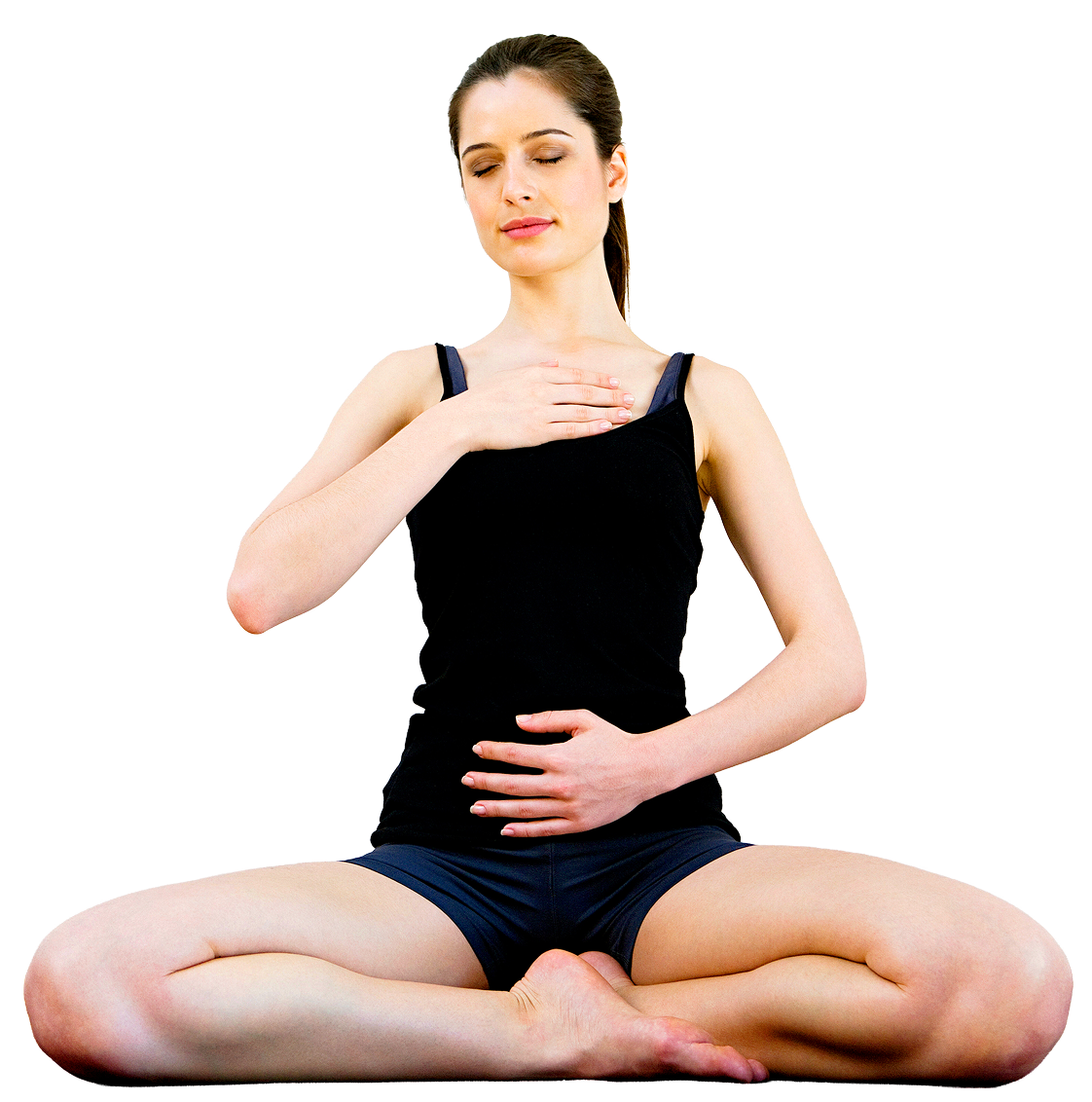
We take tens of thousands of breaths every day — around 25,000 to be more specific1 — and for the most part, we don't even notice we're doing it, but breathing is what keeps us alive and powers every system in our bodies.
Many of us are actually breathing the hard way, relying on shallow chest breaths and missing out on the full benefits of a deeper, more natural rhythm. Learning how to breathe better can have a profound effect on physical health, emotional balance, and overall wellness.
Elyce Neuhauser, expert yogini and meditation coach at Yoga-Go, explains why our breath may hold the key to better health, balance and focus:
"Shallow chest breathing is a rapid, incomplete pattern that uses the chest muscles instead of the diaphragm. It limits lung expansion and triggers the sympathetic nervous system, most commonly known as fight or flight, while also reducing oxygen intake.
"Over time, shallow breathing can raise heart rate and blood pressure, increase feelings of stress and anxiety, and even contribute to long-term issues like heart disease, weakened immunity, and sleep disorders."
The alternative? Deep belly breathing.
"Also known as diaphragmatic breathing, this technique uses the diaphragm to draw slow, deep breaths, allowing the lungs to fully expand. Unlike shallow chest breathing, diaphragmatic breathing activates the parasympathetic nervous system, our rest and digest state, which promotes relaxation, calmness, and focus. It helps lower blood pressure, improves oxygen efficiency, and gives the body an opportunity to work more efficiently.
"Deep breathing also enhances concentration, eases anxiety, supports better sleep, and when combined with other medical treatments, can help conditions such as asthma, emphysema, and chronic bronchitis."
We commissioned a survey to 1,000 Brits to have a closer look at people's breathing habits to understand just how aware they are. The results were surprising to say the least.
From work emails to evening Netflix marathons, our breathing habits often quietly mirror the pace of our lives: fast, fragmented, and distracted.
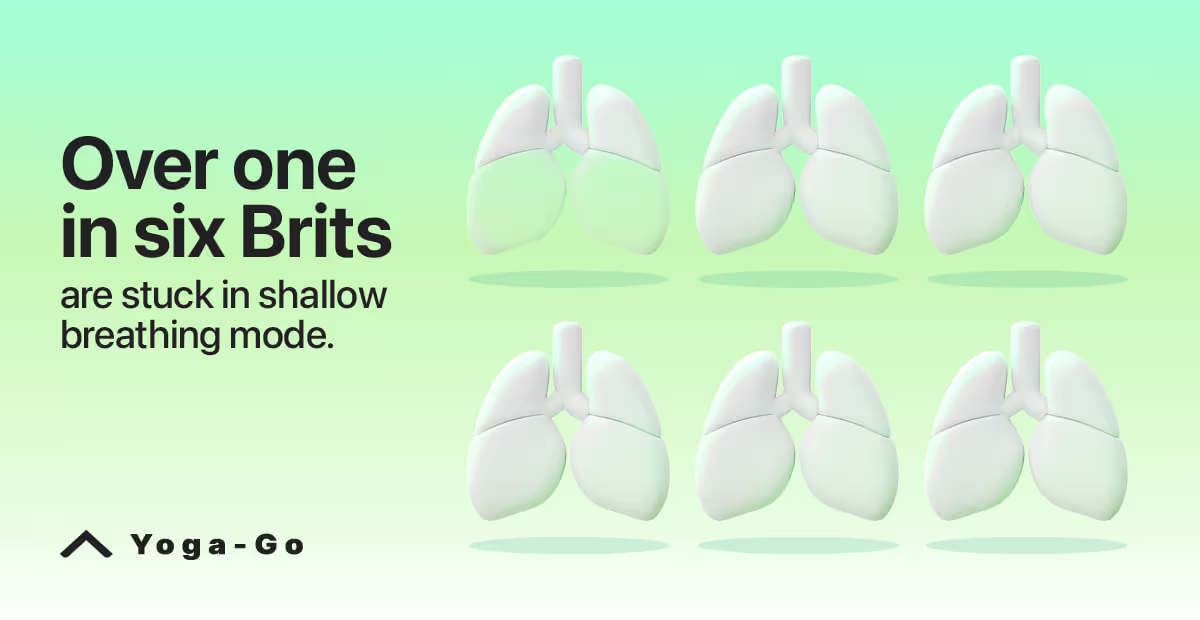
35% of adults admitted that they don't pay attention to their breathing at all, with Gen Xers being the most likely generation (50%) to agree. And when it comes to shallow breathing, one in six people in the UK rely on it as their primary breathing pattern.
Most shockingly, 62% of Brits revealed they unintentionally hold their breath in situations where that very habit is likely holding them back.
Elyce says: "While unintentional breath-holding may seem harmless, over time it can quietly increase stress, trigger headaches, impair emotional regulation, raise blood pressure and even create tension in the neck, shoulders, and jaw. That's why it's important to stay aware of your breathing and make a conscious effort to avoid holding your breath, particularly in scenarios where it can negatively impact you."
The top five scenarios where Brits unintentionally hold their breath:
Elyce explains: "Holding your breath during physical activity is quite common. While it can be useful in certain practices like yoga or Pilates, doing it without intention while active can limit oxygen supply to your muscles and brain, reducing endurance, coordination, and performance."
Elyce explains: "Stress and anxiety tighten the diaphragm and shorten breathing rhythms, so when feeling under pressure people literally forget to breathe. But breath-holding actually reinforces the body's stress response, often signalling 'danger' and triggering a rapid heartbeat, muscle tension, and spikes in cortisol, which in turn make the anxiety and stress worsen."
Elyce explains: "Similarly to when we feel stressed, we hold our breath during strong emotions like fear or excitement as a subconscious response within the sympathetic nervous system. The body freezes to assess a threat or to conserve energy. Doing so can heighten your emotions and may reinforce fear or panic."
Elyce explains: "Holding your breath while focusing is often referred to as 'email apnoea'. This reduces the oxygen flow to the brain, leading to slower cognitive processing, eye strain, headaches, and even increased tension in the shoulders and jaw."
Elyce explains: "As people unwind, anxiety or overthinking can interrupt our body's natural shift into the slower rhythmic breathing patterns needed for sleep. Holding your breath before falling asleep delays relaxation, making it harder to drift off. This can contribute to micro-awakenings or, in severe cases, cause mild sleep apnoea."
As wellness becomes a bigger priority for many, we asked Brits which areas of their wellbeing they're most eager to improve. Here's what we found:
The top three wellbeing factors Brits want to improve the most are sleep quality (47%), energy levels (30%), and physical performance (29%).
Mental clarity also stood out as a goal for over one in six Brits (17%), something that deep belly breathing supports by strengthening the mind-body connection and helping people focus and think more clearly in challenging situations.
Unfortunately, when it comes to the actions Britons are taking to reach their wellness goals, many are doing more harm than good, with the most common tactic being to have a coffee or tea (46%).
While chamomile and other herbal teas can have relaxing effects, caffeine consumption can heighten stress levels, and should be enjoyed sparingly. Other popular but less effective habits include consuming sugary snacks (26%) and scrolling on their phone (21%).
More alarmingly, 21% of people turn to cigarettes or vapes, and 18% use energy drinks, neither of which are recommended when looking to boost overall wellness. On the positive side, 45% of respondents reported exercising and 19% said they eat healthy snacks, showing some awareness of healthier methods.
To explore the potential benefits of deep belly breathing in daily life, we ran a two-week small-scale experiment with 15 adult participants. Each day, participants added a five-minute breathing routine, instructed by Elyce, while otherwise continuing with their normal activities.
They tracked their sleep quality, mood, energy, focus, and productivity, rating how they felt each day on a scale of 1-10, alongside recording their resting heart rate.
We then compared the average scores from the final three days to each participant's baseline at the start of the experiment, and the results showed measurable improvements.
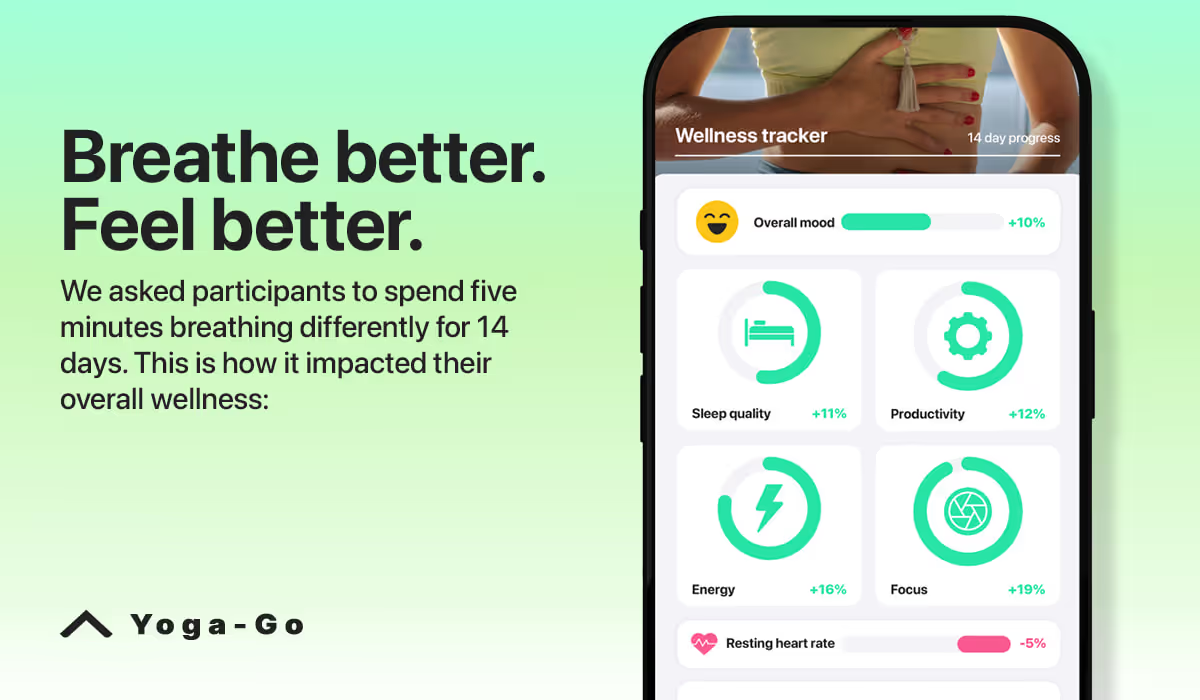
Participants saw uplifts in every area, with focus and productivity showing the biggest boost at 19% and 16% respectively. Other areas like energy (12%), sleep (11%) and mood (10%) also showed significant improvements. In addition, the average heart rate dropped by 5%, going from 65.5 to 62.3 beats per minute.
How participants benefited from deep breathing:
"Through the practice of deep belly breathing, we activate our parasympathetic nervous system, helping the body transition from an alerted state to one of rest. This shift helps lower heart
rate and calm our nervous system, which likely contributed to the better sleep, focus, and mood participants reported.
"By drawing air deeply into the lungs, the body takes more oxygen, helping boost cellular energy and mental clarity, which may explain the uplift in energy levels and productivity, as well as the small, but meaningful drop in resting heart rate we observed in the experiment."
We spend our lives rushing from one task to the next, and yet the simplest tool to reset how we feel is right under our noses. Literally.
What is perhaps most surprising of all is that over four fifths (85%) of Brits revealed that they're aware of the benefits that deep belly breathing can provide, yet only 11% actually prioritise it above shallow chest breathing.
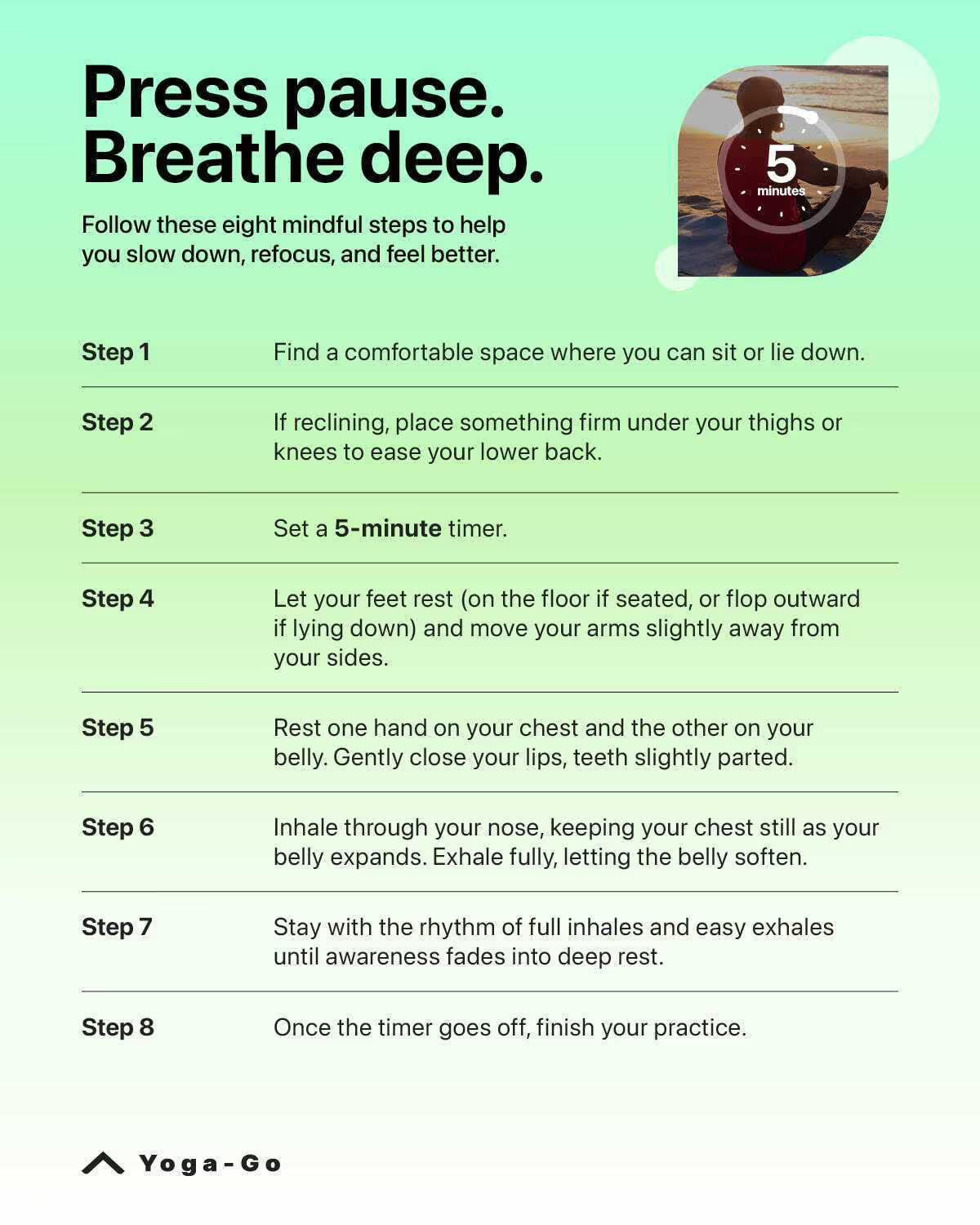
What's causing this disconnect? A lack of awareness and teaching, and that's where Yoga-Go comes in. Together with our expert Elyce, we've created an easy, five minute breathing routine — the same one used by participants in our experiment — designed to fit seamlessly into even the busiest schedules while still delivering real results:
Elyce concludes: "Learning how to breathe takes patience and time, and it’s not a linear journey. I always recommend starting slowly, even just a few minutes a day can make a difference. Begin with one session, either in the morning or evening, and if you feel inclined, you can build up to three five-minute practices.
The key is consistency. Life gets busy, and missing a day here and there is perfectly fine, just remember to return to it the next day. In a time when so many of us are looking for ways to improve our health, deep belly breathing might just be the simplest and most powerful solution.
For those just starting out, the process may sometimes feel too simple, boring, or uneventful. But instead of viewing it that way, think of these five minutes as a rare opportunity to slow down, reconnect, and truly relax, either before you start your day or as the perfect way to end it.”
Maybe the secret to feeling better isn’t in doing more, but in breathing in a way that our bodies better respond to.
Methodology
To explore the potential benefits of deep belly breathing in daily life, we ran a two-week small-scale experiment with
15 adult participants, representing a mix of ages and genders. At the same time each day, participants completed a five-minute
breathing routine, while otherwise continuing their normal activities.
Each participant tracked their sleep quality, mood, energy, focus, and productivity, rating how they felt each day on a scale of 1-10, alongside recording their resting heart rate. We compared the average scores across each wellness area from the final three days to the average baseline at the start of the experiment to reveal which areas saw the most improvements.
Sources
1.
British Heart Lung Foundation
2.
A 1,000 participant survey carried out by TLF in September 2025.
Yoga-Go was built with users in mind. See what they have to say about their experience with the app.