Very happy because it adapts to my schedules because of work, it stimulates me to make an effort and it is for my health. Thank you for existing, I hope more people know about this program.
★★★★★
How sedentary habits are quietly accelerating ageing, and the simple everyday movements that will keep you on your toes.
We don't see ourselves as inactive. Our calendars are full, our days are busy, and our to-do lists never seem to end. By most measures, we are productive people.
But look a little closer at a typical weekday and a quieter pattern begins to appear. Without realising, we move from chair to chair – desk, car, sofa – until sitting becomes the default. Somewhere along the way, we became a nation that sits.
Sitting rarely feels dangerous, often providing rest between tasks or a reward at the end of a long day. But what if it isn't as restorative as it seems? What if those seated hours are quietly shaping our health in ways we can't see?
As experts continue to warn about the long-term effects of prolonged sitting, we set out to understand the true cost of our sedentary routines and whether they could be ageing us faster than we realise.
Across the nation, the average adult spends 9.5 hours a day sitting1 and that's before sleep is factored in. Over a week, that passes 66 hours. Over a year, it adds up to almost 145 days spent sedentary.
We sit in a car, train, or bus during our commute. Then our workday settles many of us into a chair, where we move only as far as the next meeting, the next screen, or the next coffee. As these hours are often scattered throughout the day, they rarely feel excessive; there's no dramatic red flag, just quiet accumulation.
To make matters worse, many adults are not moving enough to offset those seated hours, with 75% of British adults2 failing to meet the recommended physical activity guidelines. Leaving long periods of inactivity often going unbalanced.
Over time, these habits add up, creating the perfect recipe for health issues and premature ageing.
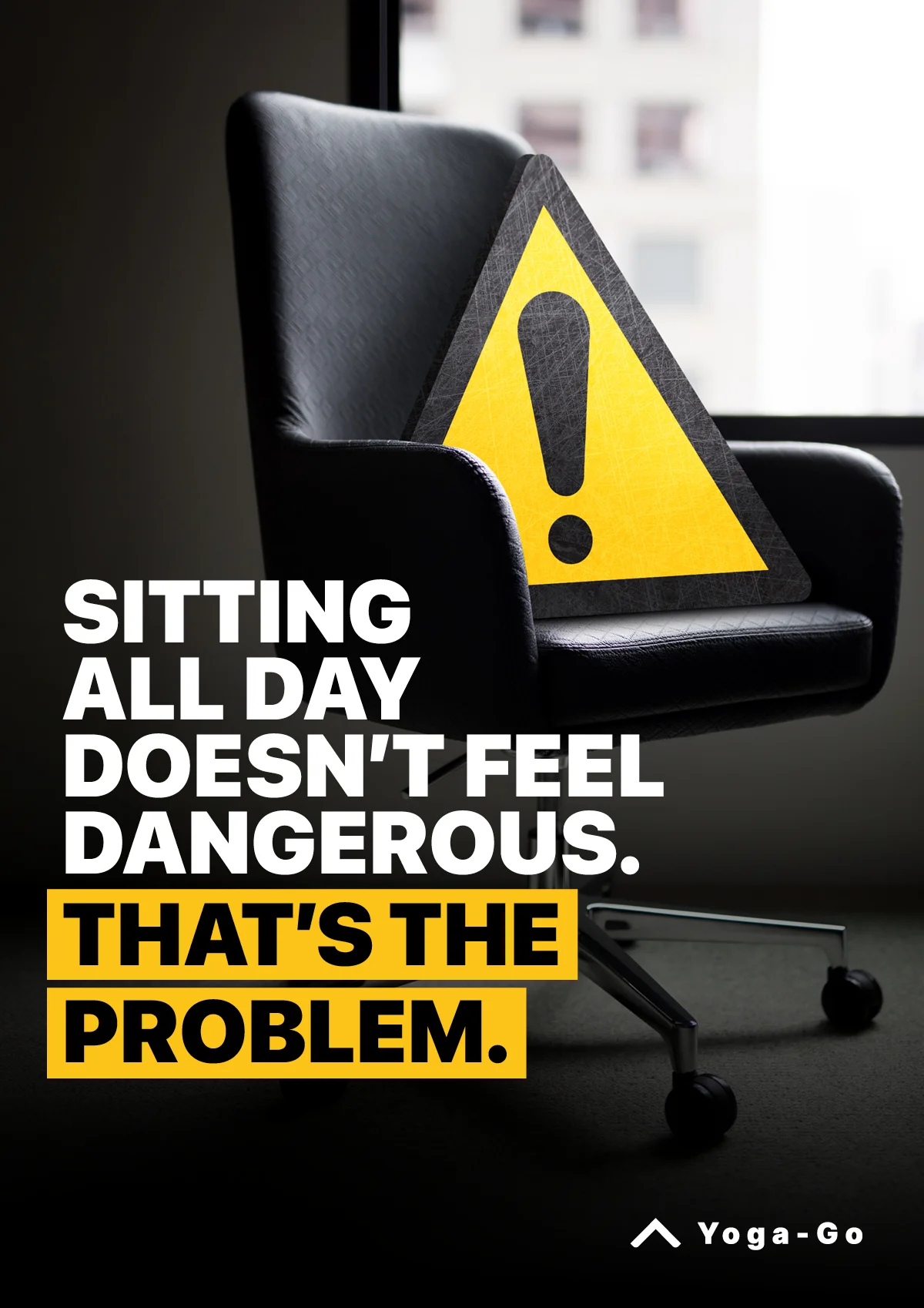
While it might not seem like it, research has shown that sitting for over 8 hours a day is associated with a higher risk of cardiovascular disease, type 2 diabetes, and all-cause death1.
This places prolonged sitting in the same conversation as other major lifestyle risk factors, such as smoking. It's not simply the absence of exercise; it's a health risk in its own right.
Tetiana Tereshencko, a sports medicine physician, explains what happens to our bodies when we spend too much time sedentary:
"Prolonged sitting disrupts circulation throughout the body. Blood and lymph flow slow in the legs, increasing the risk of swelling, spider and varicose veins, and even thrombosis. Reduced microcirculation in the back deprives intervertebral discs of oxygen and nutrients, leading to dehydration, degeneration, and possible hernias. Circulation to the neck and head may also be affected, contributing to headaches, dizziness, and blurred vision.
"At the same time, sitting in one position for long periods can cause certain muscles to tighten and even shorten, such as the chest and hip flexors, resulting in poor posture, lower back pain, and the development of painful trigger points.
"Over months or years, this physical inactivity leads to muscle atrophy, particularly in large groups like the glutes and quadriceps, reducing strength, joint stability, and balance, while increasing the risk of sarcopenia and osteoporosis. Loss of muscle mass lowers basal metabolic rate, promoting weight gain and metabolic disorders such as insulin resistance, diabetes, and high cholesterol."
Our bodies are designed to move, so when we don't, the systems that are meant to stay active will start operating at a lower baseline. While it won't happen overnight, when repeated often enough, these internal adjustments begin to stack up and resemble the very changes that are often blamed on natural ageing.
Sitting for prolonged periods does more than change how our body functions day to day; it can also have lasting effects, including adding years to our biological clock.
It's no secret that there are two kinds of age, the one on our passport and the one our body feels. One marked by the candles on a cake, and the other by the pop of our knees.
Biological age reflects how well our cells, tissues, and systems are actually functioning. It's shaped by factors like stress, sleep, nutrition, movement, and increasingly, by how much time we spend sitting.
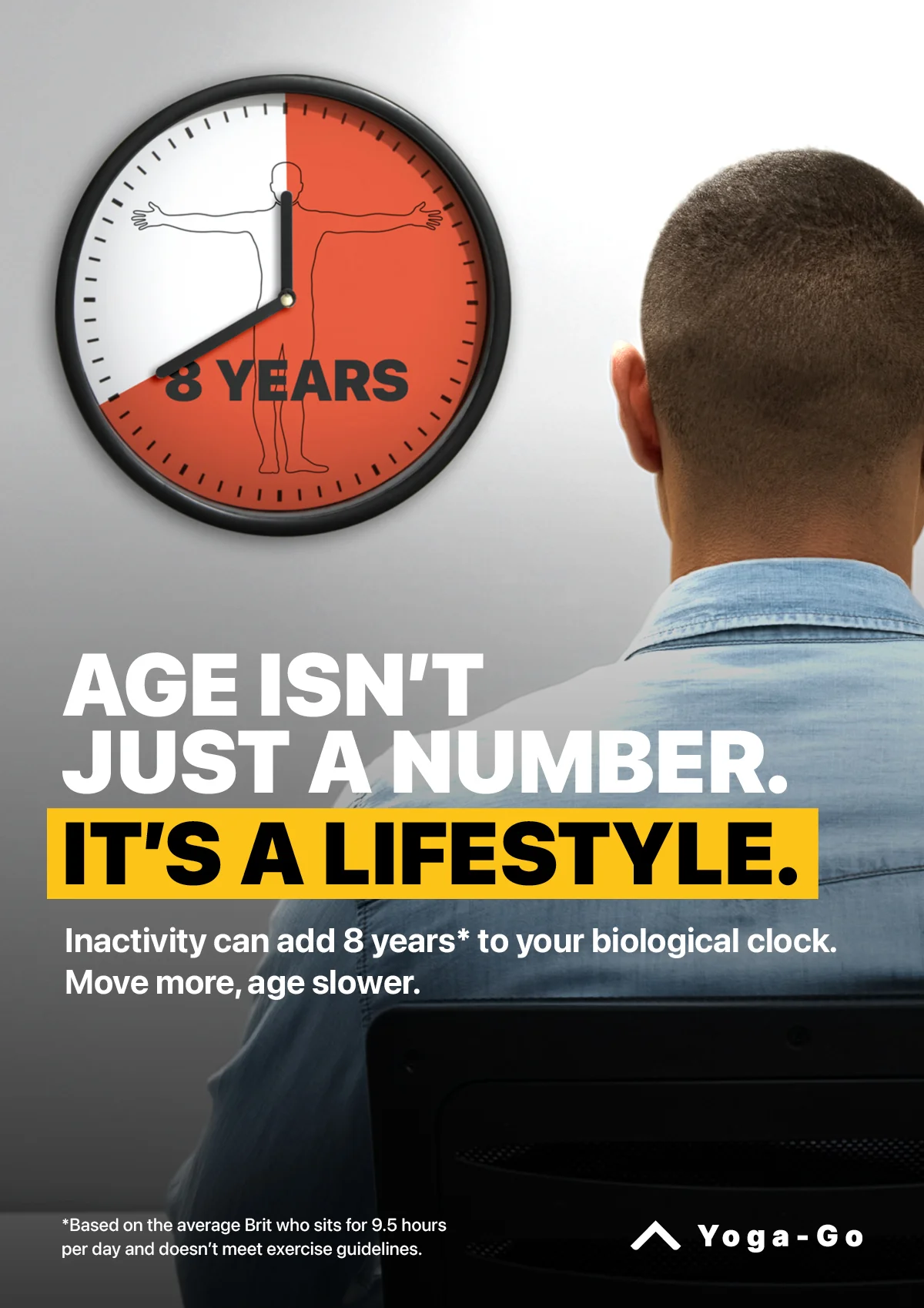
When we analysed the long-term impact of inactivity across the UK, the results were striking. On average, sitting habits and not meeting exercise guidelines could be increasing the average adult's biological age by eight years.
That's eight extra years, not lived but carried by the body. Years reflected in cardiovascular strain, metabolic slowdown, reduced muscle mass, and systemic inflammation.
The data tells a national story, but the reality will look different for everyone based on their physiology and daily habits.
To make these findings more personal, we've developed a sedentary age calculator, a tool designed to estimate how your daily sitting habits may be influencing your biological age.
The calculator looks at four key factors: current age, average number of hours spent sitting each day, how active you are overall, and the typical length of time you sit before taking a break.
Using this information, it estimates your sedentary age, an indication of how prolonged sitting could affect your body over time. It's important to note that this tool has been designed for educational and awareness purposes only. It can't predict individual health outcomes, and it doesn't account for every personal factor that can influence ageing.
Discover how your daily habits affect your sedentary age.
We do not collect the information you enter or your calculation results. They are stored in your browser and will be deleted once you leave the page.
We've grouped these into four categories based on the urgency and level of biological ageing:
These categories aren't labels, they're signals. Small prompts showing where consistent, manageable changes could make a meaningful difference. Because while ageing may be inevitable, how we age isn't entirely out of our hands, and sometimes, it begins with something as simple as standing up.
Although they're closely linked, movement and exercise are not the same, and the small differences between them become even more important when trying to help people understand the effect they can have on longevity.
To help unpack the differences between them, Melissa Leach, a yoga instructor and strength and conditioning coach, highlights how they differ and why they both matter.
Melissa explains: "Movement is what happens throughout the day, the decision to stand rather than sit, to go on a walk during your lunch break, or to break up a long stretch of stillness with small, deliberate bursts of activity.
"Exercise plays a separate and essential role, specifically if you sit for more than eight hours a day, in which case, light movement alone is unlikely to offset the risks. Instead, exceeding NHS weekly exercise guidelines becomes crucial, with some research suggesting 60–75 minutes of moderate-intensity activity per day for heavy sitters.
"Movement and exercise are not interchangeable. One workout cannot undo a full day of sitting, just as standing every 30 minutes doesn't replace structured cardiovascular or strength training. They work together, daily doses of movement for maintenance, and structured exercise for protection."
If sitting has become a normal part of modern life, then more movement should be built in, too.
Melissa says: "We are aware that if someone is sitting around 8 hours a day for work, they might not necessarily have the time to add an over an hour-long workout into their daily routine. Thankfully, the solution is simple: we need to sit less while including more movement into our day."
How often should you move: "Ideally, you should move every 30 to 60 minutes. Not to exercise, but to interrupt stillness."
Duration: "Even just 1 to 2 minutes can help improve circulation, support joint health, and sharpen mental focus. The ideal break length is anywhere between 2 and 5 minutes."
Movements: "Regular micro movements are what we are looking for. Short sequences that can be done anywhere and place an emphasis on joint mobility, and light strength-based movement to support posture and reduce strain on the back and neck."
Examples include:
Consistency over intensity: "This approach is far more effective than sitting for hours and then trying to 'undo' the damage with a single workout later. A mobile movement plan like this one should prioritise consistency, with gentle progressions that build resilience over time."
It might sound daunting, but this study isn't about overhauling daily life. It's about small, simple habits that help Brits move better, reduce pain, and stay active for longer.
The campaign estimates the long-term health impact of sedentary behaviour by translating daily sitting and activity patterns into a single measure: sedentary age.
We analysed a range of peer-reviewed studies examining the relationship between daily sitting time, physical activity levels, average sitting bout duration, and all-cause mortality across different age groups. These studies provided relative risk estimates for varying combinations and activity behaviours.
From this research, we created a risk table that maps levels of sedentary behaviour and physical activity to mortality risk by age group. We then aligned these findings from longevity studies that estimate how sitting and physical activity can add to, or subtract from, life.
The risk table was combined with age-based life expectancy data to equate mortality risk with years of life gained or lost. This enabled the development of a formula that calculates an individual's sedentary age using four inputs: chronological age, physical activity level, daily non-sleep sitting time, and average sitting bout duration.
The model accounts for the cumulative nature of sedentary risk. Younger individuals are penalised more heavily for inactivity, as prolonged sedentary behaviour compounds health risks over time. Conversely, older individuals are rewarded by maintaining activity levels appropriate to their age, reflecting evidence that sustained movement delivers meaningful health benefits later in life.
Sources used:

Melissa is a certified yoga instructor and strength & conditioning coach with extensive experience in the health and wellness field. She specialises in yoga education, teacher training and holistic lifestyle coaching, drawing from styles such as vinyasa and ashtanga. Over the years, she has worked with a wide range of communities, including children, veterans, and athletes. Melissa is passionate about creating safe, empowering spaces where individuals can reconnect with their bodies, build strength, and develop greater self-awareness.

Tetiana is a sports medicine physician and registered dietitian with over 13 years of professional experience in clinical and performance nutrition. She specialises in body composition management, including weight loss and weight gain, using an integrated approach to support overall health and long-term wellbeing. Tetiana also focuses on enhancing athletic performance and managing medical conditions such as hypertension, endocrine disorders, and digestive and respiratory issues.
Yoga-Go was built with users in mind. See what they have to say about their experience with the app.